
Bookcases, Library Walls And Alcove Shelving In Torquay: What They Cost And How To Stop Shelves Sagging
Bespoke Joinery Torquay
In Torquay a bespoke bookcase can cost anything from £1,200 for a freestanding piece to £18,000 for a hardwood library wall, and most of the gap is explained by three things: how much of the wall it covers, what it is made from, and how much work the wall itself needs before a shelf can go anywhere near it. That last point matters more here than in most towns. Sixteen of Torbay’s 24 conservation areas are in Torquay, and the Victorian villas inside them have lime plaster over rubble stone, walls that lean, and rooms that run at 85 to 91 per cent humidity through spring. This post sets out realistic Torbay price bands, explains how we keep a loaded shelf flat over twenty years, and goes through the choices that change depending on whether you live in a Warberries villa or a 1930s semi in Shiphay.
What Bookcases And Library Walls Cost In Torbay
Shelving is priced by the metre of wall it covers and by what it is made from, so a quote only makes sense once both are pinned down. A single painted alcove bookcase with a cupboard beneath, built into the recess beside a chimney breast, generally comes in between £1,800 and £3,200 in Torbay. A painted library wall of floor-to-ceiling shelving across a three to four metre wall is typically £5,000 to £9,000. Specify the same wall in oak, ash or sapele and the figure moves to £9,000 to £18,000, because hardwood costs more per cubic metre and takes longer to machine, joint and finish. A freestanding bookcase made to measure, which can leave the house with you, sits in the £1,200 to £3,500 range.
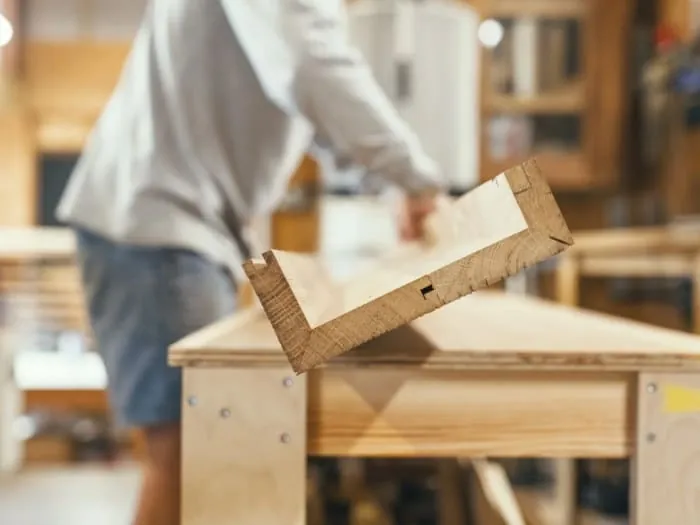
Those bands match the guide prices on our alcove units and home offices service page, and they assume a survey, drawings, workshop manufacture and fitting. Integrated lighting, new sockets and any making good of the plaster are separate lines on our quotes. Ask any other firm for the same breakdown, or you end up comparing a shelf price with a room price. We have already covered what a fitted desk and office wall costs and what media walls and television units cost on this blog, and this post deliberately avoids repeating either. Bookcases raise their own problems, mainly weight, span and timber movement, and that is what the rest of this piece is about.
Alcove Shelving, A Library Wall Or A Freestanding Bookcase?
The three formats behave differently in the room and on the invoice. Alcove shelving uses the two recesses either side of a chimney breast, which almost every Victorian sitting room in Torquay has, and it has the advantage that the walls on three sides do the structural work, so the shelves only have to span the width of the recess. It is the cheapest fitted option and the one that disturbs the room least.
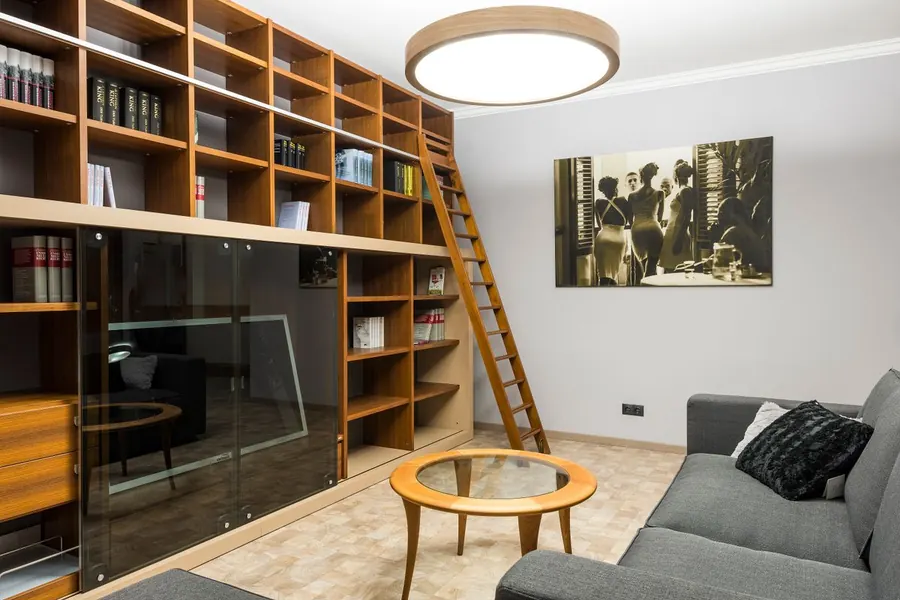
A library wall covers the whole elevation, floor to ceiling and skirting to cornice, and turns the wall into a single piece of furniture. It is built as a run of carcasses that are fixed together and to the wall, with a fascia and plinth scribed to the room so the joints vanish. Over about 2.4 metres high a ladder or a step becomes part of the design rather than an afterthought. A freestanding bookcase is the right call for anyone renting, anyone in a listed flat where the lease forbids fixings, or anyone who wants the piece in the next house. It costs less to fit but, because it has to stand up on its own, the back panel and sides are heavier than a fitted unit’s, and the top will always show a gap to the ceiling.
Shelf Span, Thickness And The Lip That Stops A Shelf Sagging
Books are heavy. A full shelf of hardbacks weighs 25 to 30 kilograms per linear metre, and that load never comes off. Timber and board creep under permanent load, so a shelf that looks fine on fitting day can carry a visible bow five years later. The fix is not complicated. It does have to be designed in, though, because once MDF has sagged it stays sagged.
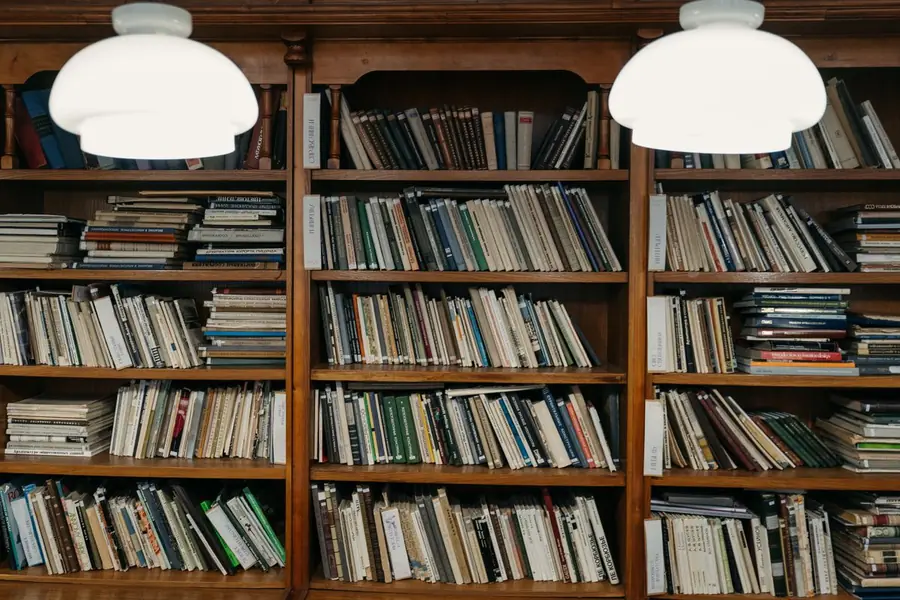
Our working limits for a shelf carrying books are around 700mm unsupported for 18mm MDF, 800mm for 18mm birch ply and up to 900mm for solid oak at 22mm to 25mm thick. A Torquay alcove is often 1,100mm to 1,400mm wide, which is past every one of those limits, so a plain board across the recess will drop in the middle. There are three ways to deal with that. A front lip glued and pinned along the leading edge, 40mm to 50mm deep, turns the shelf into a shallow beam and roughly doubles what it can carry. A rail fixed to the back wall supports the rear edge along its full length. And an intermediate upright halves the span, which in a very wide alcove is the honest answer. Adjustable shelves on pins are convenient but every pin is a point load on a small hole, so on heavy runs we house the shelves into the uprights or fix them permanently.
Carcass materials, in plain terms
For painted work we use moisture-resistant MDF for the carcass and shelves, with tulipwood for anything that gets handled or needs a crisp moulding. For a stained or oiled finish the carcass is veneered board or birch ply with solid hardwood lippings and face frames, and the shelves are solid timber. Standard chipboard with a foil wrap has no place in a bookcase that is expected to carry books; it is the material behind most of the bowed flat-pack units we get asked to replace.
Fixing Shelving To Lime Plaster And Walls That Are Nowhere Near Straight
The villas of the Warberries, Lincombes and Wellswood were plastered in lime over rubble limestone and, on internal partitions, over timber lath. Lime plaster is soft and it crumbles around a fixing, so a screw and plug driven into it will hold a picture and not much more. A loaded bookcase has to be anchored into the masonry or the studwork behind the plaster, which means finding it first, and in a solid stone wall that can mean a 25mm to 40mm depth of plaster and render before the fixing reaches anything that will take a load.
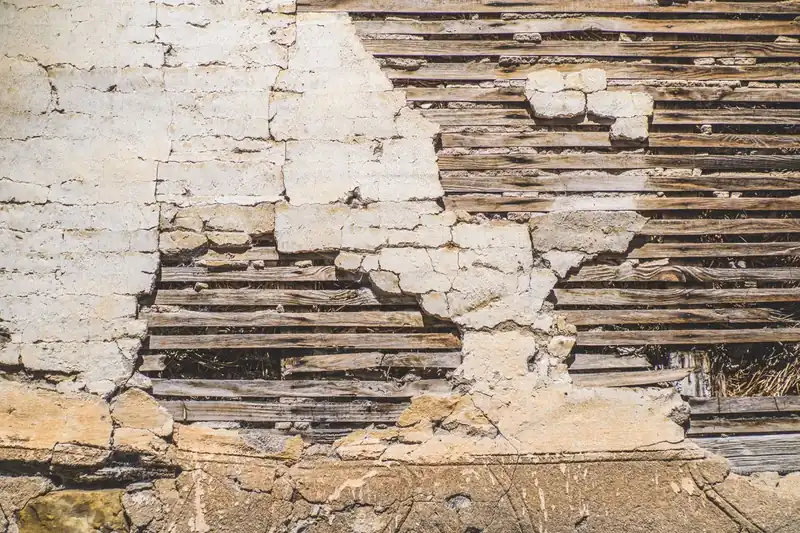
Our approach is to fix a timber sub-frame or battens to the wall with long frame fixings, or resin anchors where the stone is soft and shaley, then hang the joinery off the frame. The plaster is never asked to carry anything. The second problem is that these walls are rarely flat or plumb. Nobody built them with shelving in mind. A 20mm lean over the height of a room is normal in a house of that age, and we have measured a good deal more. Fitted joinery is scribed to the wall: the side panels and fascia are cut to follow the plaster so there is no wedge-shaped gap, while the carcass itself is kept square and level. That scribe is the difference between a unit that looks built into the house and one that looks pushed up against it. In the 1930s semis the walls are brick with a harder gypsum or cement plaster, which takes a conventional fixing, but the chimney breasts there are often shallower, so the alcoves are narrower and the shelf span problem is easier.
Painted Or Hardwood In A Town That Averages 896mm Of Rain
Torquay gets around 896mm of rain a year and spends a good part of spring at 85 to 91 per cent relative humidity, which is the climate every bookcase in the town has to live in. Timber takes on moisture and gives it up with the seasons. The shelving has to be designed around that movement, not against it.

Painted moisture-resistant MDF is the most dimensionally stable option, which is why it suits a library wall where long runs of fascia and plinth have to stay straight. The weak point is the paint film. In a room that is damp and only heated in the evenings, a water-based finish can stay slightly soft and books pressed against it for months will mark it. We spray a hard-wearing two-pack or a good acrylic eggshell in the workshop, let it cure properly before fitting, and tell you how long to keep the shelves empty. Hardwood needs none of that care but it moves: a 300mm deep oak shelf can change width by a couple of millimetres between a wet April and a dry August. Shelves are housed with room to move, back panels float in grooves, and face frames are jointed so nothing splits. Oak, ash and elm all suit Torquay rooms, and we looked at the character of each in more detail when we wrote about choosing timber for bespoke joinery in Torquay.
Lighting, Sockets And Where The Cables Go
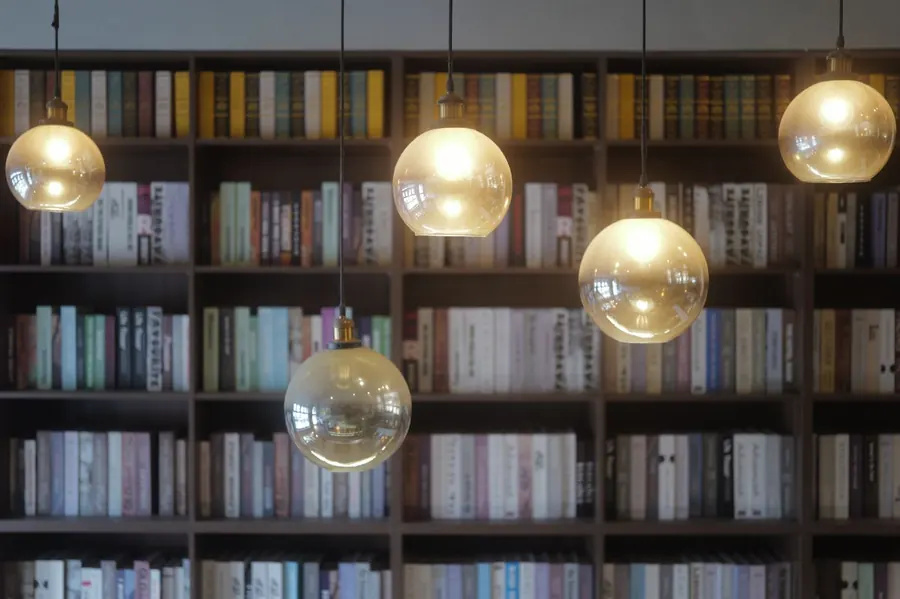
Decide on lighting before the drawings are finished, not after the unit is on the wall. Retro-fitting a cable into a finished bookcase is an ugly job. The usual options are a slim LED strip tucked behind a lip on the underside of each shelf, a downlight in a pelmet at the top of each bay, or a single warm strip washing the back panel. Each needs a route for the cable. We machine a channel in the back of the uprights or leave a 20mm void behind the back panel, and the driver sits in a vented cupboard base where it can be reached for replacement.
The low-voltage lighting itself is simple, but the new socket or fused spur feeding the driver is notifiable electrical work in some circumstances under Approved Document P of the Building Regulations, so we bring in a registered electrician for that part and their certificate stays with the house. If you want a desk, printer or a television built into the same wall, the cable management starts to look more like the problems we worked through in our post on media walls and built-in TV units in Torquay, where the number of outlets and the heat from a fire or equipment drive the design.
A Warberries Villa And A Shiphay Semi Want Different Bookcases
The tall rooms of a Victorian villa in the Warberries, Lincombes or Chelston have deep skirtings, a cornice and sometimes a picture rail, and the ceilings run to three metres or more. A library wall there should stop at the cornice with a scribed top rail, carry a plinth that matches the skirting height, and use a ladder rather than leave the top 600mm as a dusty shelf for things nobody can reach. If the house is listed, which 864 buildings across Torbay are, fitted shelving fixed to the fabric can count as an alteration, and Torbay Council’s planning and building control service is where to check whether listed building consent is needed before anything is screwed to a wall.
The 1930s semis of Shiphay, Barton and the streets off the Newton Road are a different brief. Ceilings are around 2.4 metres, the alcoves beside the lounge chimney breast are often less than a metre wide, and the window bay takes up most of the front wall. Shelving there works best at mid height with cupboards below, so the room keeps its proportions, and a single run of shallow shelves across the back wall of the dining room will hold more books than most people expect. The brick walls take fixings without drama, and the main design question is usually whether to keep the original 1930s picture rail or run the shelving past it. If you want the broader argument for having something made rather than bought, the British Woodworking Federation sets out what a properly made piece of joinery should be built to, and our earlier post comparing a fitted home office or alcove unit in Torquay covers the desk-and-storage side of the same alcoves.
Whichever house you are in, the useful first step is a visit to measure the walls, check what they are made of and talk through how many books, records or files the shelves actually need to hold. Get a free quote for bookcases or alcove shelving in Torquay and we will come and look at the room.