
How Much Does A Fitted Home Office Or Alcove Unit Cost In Torquay?
Bespoke Joinery Torquay
Somewhere between £900 and £6,000, and the gap between those two numbers is almost entirely decided by one question: are you buying shelves, or are you buying a room that works. Torquay has more people trying to answer that question than it used to. A run of terraced houses built for naval families in the 1880s, and a much later wave of buyers who now spend three days a week at a desk that used to be a dining table, do not naturally suit each other - and a fitted home office is usually how the two get reconciled.
This guide sets out what people actually pay locally, which decisions move the price the most, and the two things about Torquay’s own housing stock - box rooms and solid-walled Victorian bedrooms - that catch people out before a joiner has even measured up.
What Fitted Home Offices And Alcove Units Actually Cost In Torquay
Three products get called the same thing, so it is worth separating them before comparing quotes. A pair of alcove shelves either side of a chimney breast, made and fitted but with no desk or cupboards, runs from about £900 to £1,500 per side depending on finish. Add cupboards below the shelves and you are in the £1,800 to £3,000 bracket per side. A full fitted home office - desk built into the space, drawer banks, upper cupboards, and the cabling routed rather than trailing across the floor - typically lands between £3,000 and £6,000 for a single wall, more if the room needs two working positions.
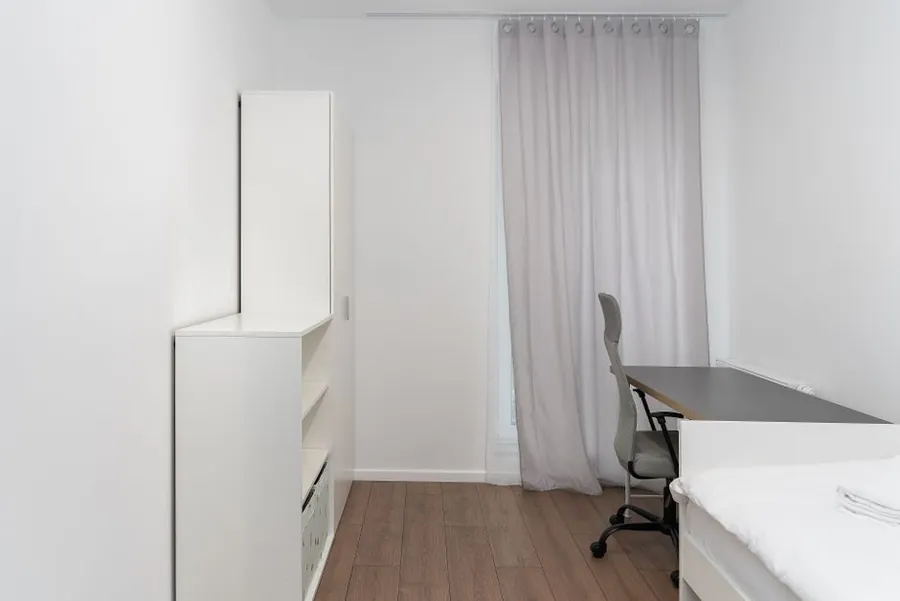
Those figures sit alongside the bands we publish on our alcove units and home offices page, and hold up against most local quotes you will gather. What varies most between two joiners pricing the same room is rarely the timber. It is how much of the specification - sockets, lighting, cable management, the desk surface itself - has actually been thought through before the number is written down.
Working From A Box Room Or Landing In A Torquay Terrace
A lot of Torquay’s housing was never built with a spare room to convert. The terraces around Ellacombe and the smaller Victorian streets nearer the harbour typically have a third bedroom you could charitably call compact, and plenty of the bay-fronted semis further out have a wide landing rather than a fourth room at all. Both have become the default home office site for anyone who bought before working from home was a daily habit rather than an occasional one.
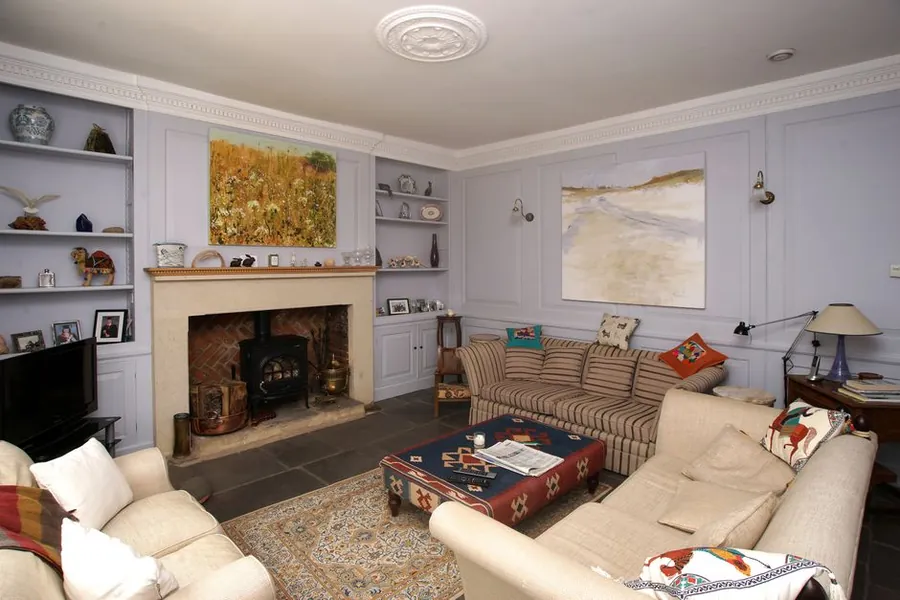
The trick in a genuinely small room is not fighting the floor area, it is using the wall. A desk built into an alcove and returned around a corner uses depth a freestanding desk never can, because it is cut to the exact dimensions of the space rather than to a standard flat-pack width. On a landing, the same logic applies sideways - a run of cabinetry along a blank stretch of wall, sized to the actual gap between two doorways, does the job a bought desk simply will not fit into.
Alcoves Either Side Of The Chimney Breast - What Drives The Price Up
Most Torquay bedrooms from the Victorian and Edwardian building booms - Wellswood, Chelston, the streets above Meadfoot - share the same layout: a chimney breast projecting into the room with an alcove on either side. It is a gift for a home office, because those alcoves are already the right shape for shelving and a desk, but the houses themselves are rarely square. Walls in period rooms can be out of true by a couple of centimetres over their height, and skirting boards and cornices are almost never a consistent depth from one end of a wall to the other.
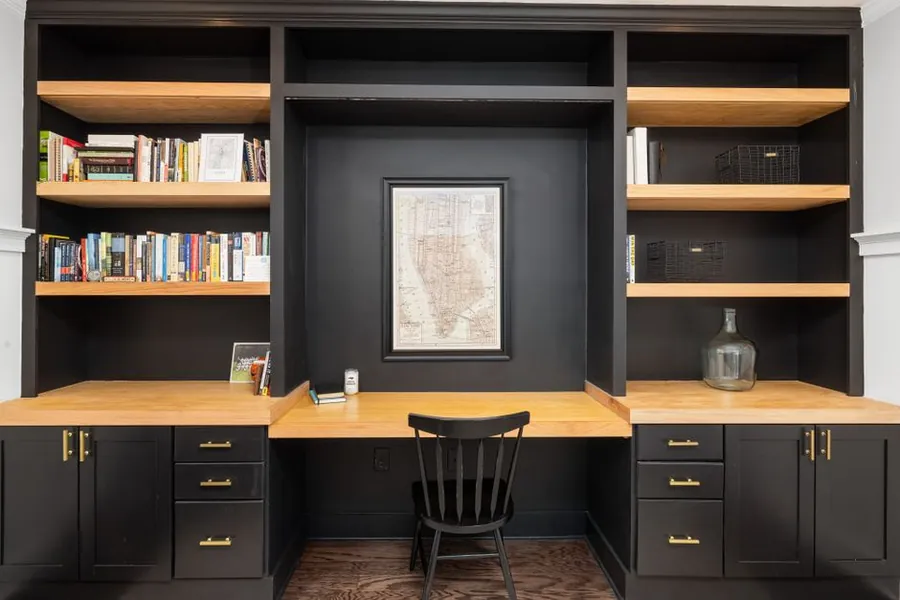
Fitting into that means scribing each panel to the real line of the wall rather than to a theoretical straight one, which is slower and more skilled work than screwing a standard carcass to a flat surface. It is the main reason a scribed alcove unit in a period Torquay bedroom costs noticeably more per metre than the same shelving in a new-build box room at Shiphay - and also why it looks like it has always been there rather than like something bolted on afterwards.
Cable Management, Sockets And Lighting - The Costs Nobody Quotes For
The part of a home office quote most people forget to ask about is also the part that makes the room feel finished rather than improvised. A monitor, a laptop dock, a printer and a desk lamp add up to more trailing cable than most rooms have sockets for, and running an extension lead across the floor under a desk is exactly the kind of thing a proper fit-out is supposed to make unnecessary.
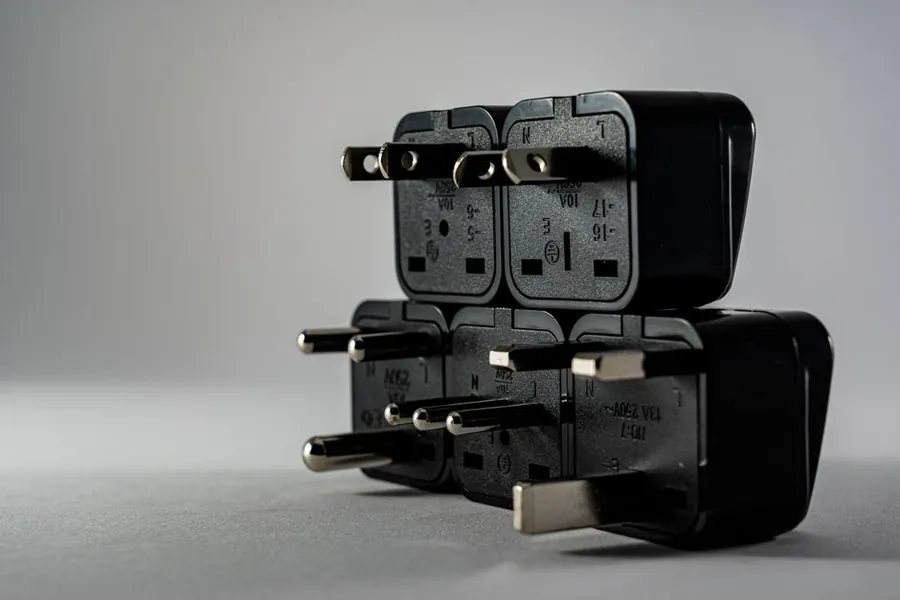
A joiner will route cable channels into the back of the desk and up through the carcass to a socket position agreed at the drawing stage, but the sockets themselves are electrical work and need a qualified electrician, either arranged by the joinery firm or by you directly. Adding a new socket on an existing circuit is generally straightforward, but the Planning Portal’s guide to the building regulations covering electrical work is worth a read if your home office needs a new circuit rather than a spur off an old one. Ask about this before the quote is signed off, not after the cabinet is installed and you discover the nearest socket is a metre away with nowhere tidy for the cable to go. It typically adds a modest sum to the job - moving or adding a double socket is usually well under £200 - but it is the single most common thing left off a first estimate.
Desk, Shelving Or Both? Layout Choices That Change The Quote
Shelving alone is the cheapest route to a usable working wall, and for anyone who mostly needs somewhere to put books, files and a printer rather than a permanent desk, it is often the right call. Adding a fitted desk surface - as opposed to a freestanding desk pushed against the shelving - is what moves a quote from the lower end of the range towards the middle, because the worktop itself has to be scribed to the room and supported properly rather than simply standing on legs.
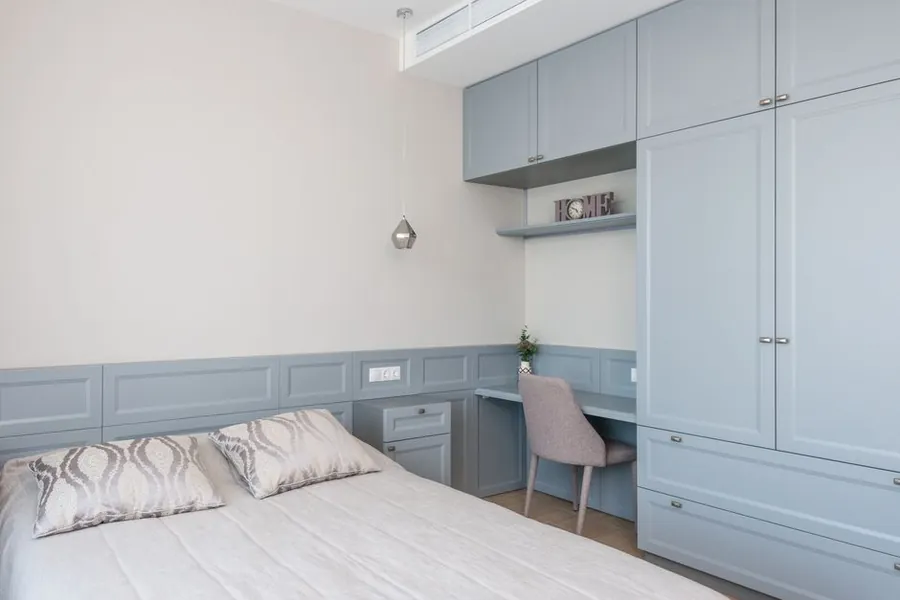
Drawers underneath the desk are the next lever, and the most labour-intensive part of the whole piece - each one is a box built and fitted with running gear, not a panel with a handle screwed on. Where people most often overspend is on upper cupboards running the full height of the room when open shelving would have done the same job for less and looked less enclosing in a small space. Where they most often underspend is on the desk itself, which gets the heaviest daily use of anything in the room and is the worst place to save money on materials.
Working Within A Period Fireplace Or Cornice
A fair number of Torquay’s period bedrooms still have their original fireplace surround, and quite a few have a cornice running around the top of the walls that a standard flat-pack unit would either ignore or, worse, cut straight through. Neither of those things is a reason to avoid fitted joinery in the room - if anything it is the strongest argument for it, because a piece made to the room can be designed to stop short of the cornice, or scribed around it, rather than clashing with it.
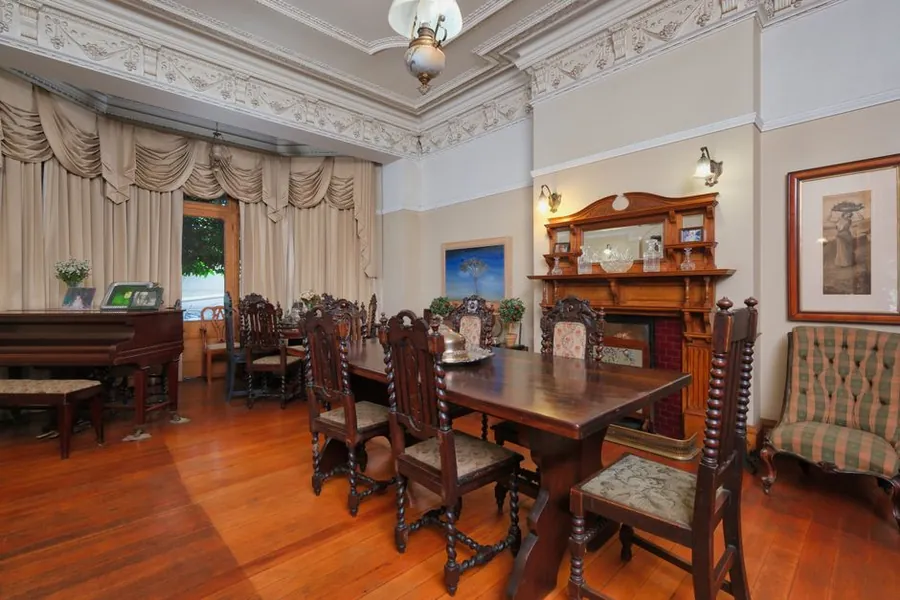
This is one of the clearer places where a workshop-made unit earns its price over a bought one. A catalogue cupboard is built to a fixed height and simply stops wherever it stops; a piece drawn for your room can be specified to finish just below the cornice line with a scribed top edge, so the join looks intentional rather than like an afterthought. If you own an original fireplace you want to keep visible, say so at the survey stage - it is far easier to design a desk return around a fire surround from the start than to argue about it once cabinets have been cut.
Getting A Quote You Can Actually Compare
Two quotes for a home office can only be judged against each other once you know they describe the same specification. Ask every firm you’re comparing to put in writing: the material of the carcass and worktop, who is doing the electrical work and to what standard, the finish and whether it is applied on site or sprayed in the workshop, and the lead time from survey to fitting day. We went through the same exercise for what a bespoke staircase costs in Torquay, and the same rule applies here - a single figure on one line of an email is not a specification, it is a guess dressed up as one.
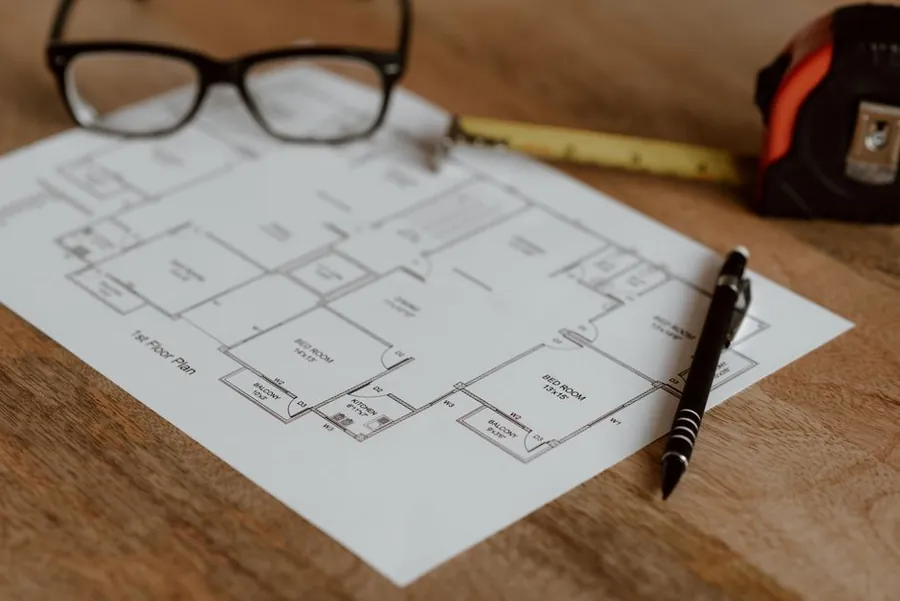
If your household is now spending more hours at a desk at home than anyone expected five years ago, the HSE’s guidance on setting up a home workstation is worth a look before you finalise the desk height and layout, and if you are self-employed it is worth checking HMRC’s simplified expenses rules for working from home, since a properly fitted office is exactly the sort of improvement worth keeping receipts for.
If you would like a figure for your own room - box room, landing or period bedroom, chimney breast and all - get a free quote and we will come and measure it properly.