
Outdoor Timber Joinery In Torbay: What Survives Salt Air
Bespoke Joinery Torquay
There is a point on most Torbay streets where you can taste the sea in the air. Everything made of wood on the outside of the house is sitting in that, all day, every day, and it is not the same problem as rain. Rain dries. Salt does not.
This post is about the pieces that live outside - side gates, driveway gates, porches and canopies, garden doors, external frames and thresholds. Not windows, which are their own subject, and not the internal work covered in our posts on timber care and species choice. Just the joinery that takes the weather directly.
Outside Work Is A Different Trade To Inside Work
An internal cabinet has one job: to stay the size it was when it left the bench. Something external has to move, shed water, take a knock from the wind and still shut properly in February. The construction rules change completely.
The most obvious change is tolerance. Indoors we work to a millimetre or less. On an external gate we leave deliberate gaps, because that gate is going to gain width in a wet January and we would rather it did that into fresh air than into the frame. Adhesives change too - anything outside wants a D4 rated waterproof glue, not the PVA that is perfectly fine for a wardrobe carcass. So does the way a panel sits in its groove, the way a top rail is angled, and where the fixings go.
The other change is that the finish becomes structural. Indoors a finish is mostly there to look right and stop marks. Outdoors it is the only thing standing between the timber and a coastline, and when it fails the timber starts failing about a season later. That is as true of external doors and frames as it is of a five-bar gate.
What Salt-Laden Wind Actually Does To Timber
Salt itself does not rot wood. What it does is hold water. Sea salt aerosol lands on every outside surface within a few hundred metres of the shore, and it is hygroscopic - it pulls moisture out of the air and keeps a thin damp film on the surface long after the rain has stopped.
That matters because decay fungi need timber above roughly 20% moisture content to get going. A gate that dries out properly between showers never gets there. A gate held permanently damp at the surface by a salt film spends far more of the year in the range where rot is possible, and the difference shows up first at the bottom rail and the end grain.
Torbay adds two more things to the mix. Wind-driven rain on this stretch of coast falls into one of the most severe exposure categories British building standards use, so the water does not just land on horizontal surfaces - it is pushed sideways into every joint. And with around 896mm of rain a year and spring humidity sitting somewhere between 85 and 91%, the drying-out periods are shorter than most of the country gets. On the other side of the ledger, the English Riviera gets some of the highest sunshine totals in Britain, which is lovely for the visitor economy and hard on a south-facing finish.
The Ironmongery Gives Up Long Before The Wood Does
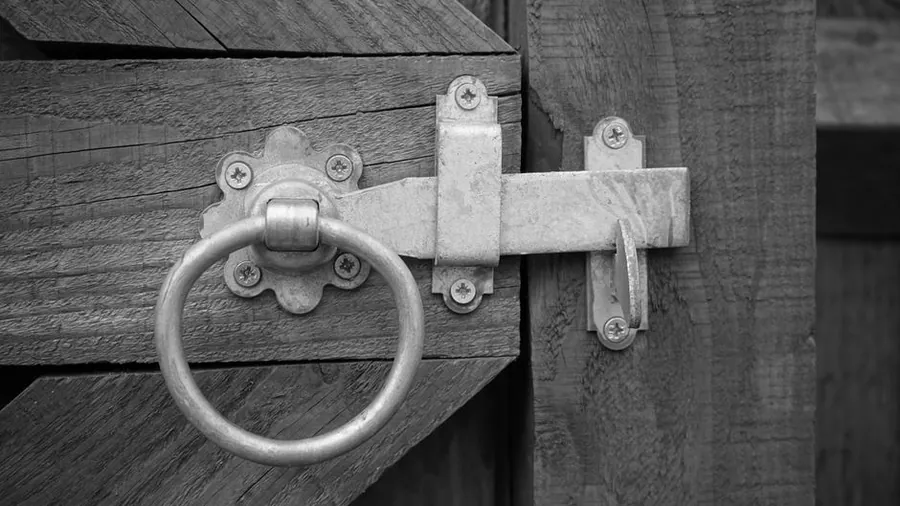
Nine times out of ten, when someone calls about a failed seafront gate, the timber is sound and the metalwork has died. Chloride in the air attacks zinc coatings much faster than inland air does, and most of what is sold as a gate hinge is electro-zinc-plated - a coating measured in single-figure microns.
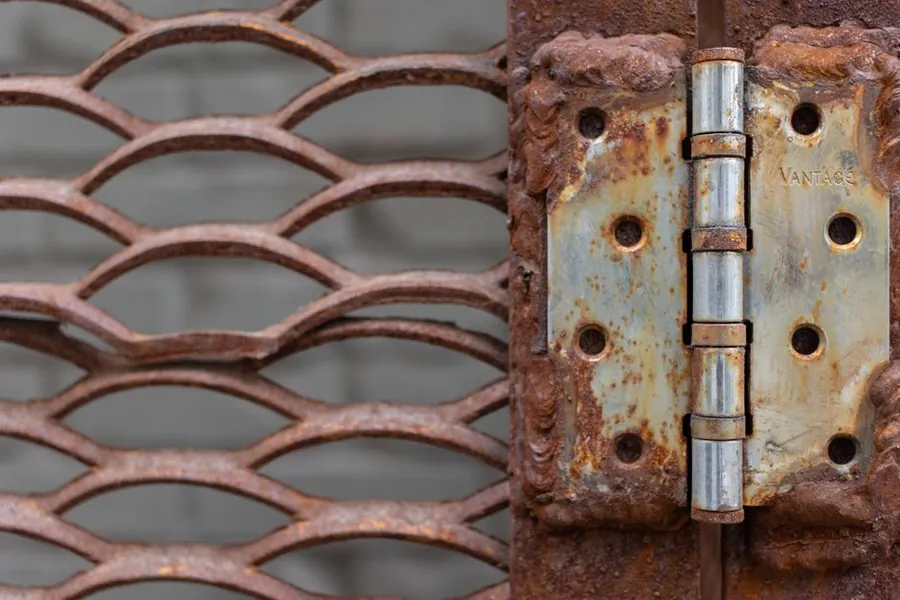
Two winters on a road facing the bay is enough. The plating goes, the steel underneath weeps rust down the face of the gate, the pin starts binding and the gate drops. At which point people plane the bottom of the gate to make it close again, which fixes nothing, because the problem is a worn hinge.
The order of preference is straightforward. Electro-plated zinc has no business within a mile of the water. Hot-dip galvanising is a genuine step up, with a far thicker sacrificial coating, and it does fine on sheltered streets - just be aware that drilling or cutting it exposes bare steel, so any modification needs a cold galvanising touch-up. A4 stainless, the marine grade with molybdenum in it, is what we default to for anything with a sea view. It costs perhaps three times what the plated equivalent does on a small gate, which sounds a lot until you price the second and third hinge replacement.
One detail that catches people out: never put plain steel or zinc fixings into oak. Oak tannin reacts with ferrous metal and leaves black-blue staining that soaks into the grain and will not sand out. Stainless only, in oak, always.
Species That Last By The Sea, And Roughly What They Cost
Four timbers cover almost all outdoor joinery around Torbay, and they sit in a reasonably clear order.
Treated softwood is the value choice and there is nothing wrong with it, provided the treatment is right for where the timber sits. Anything going into the ground - gate posts above all - needs to be treated to Use Class 4 rather than the Use Class 3 that suits above-ground work, and the difference is not visible to the eye. The Wood Protection Association’s guidance on Use Class 4 timber is worth a read before you accept a quote that just says “treated”. Any cut you make on site exposes untreated wood and needs an end-grain preservative before it goes in the hole.
European oak is the traditional answer and the heartwood is properly durable. The catch is that the sapwood is not, so it matters that whoever is cutting your gate is selecting boards rather than using whatever came off the stack. Oak also moves and it bleeds tannin for the first year or two, which stains render and light paving underneath.
Iroko is a step up again in durability and is very stable once it settles, which is why it turns up in harbour joinery and boatyards. Accoya, which is softwood put through an acetylation process, behaves differently to all of them - it barely moves with moisture, holds a paint film exceptionally well and carries a fifty-year above-ground durability guarantee. On price, treat softwood as the baseline; oak and Accoya usually land somewhere around two to three times that in material cost, and iroko at or above them depending on supply. If you want the longer version of that comparison, our post on choosing timber for bespoke joinery in Torquay goes species by species.
Joints That Shed Water, And The End Grain That Drinks It
End grain takes up water something like ten times faster than a flat face does. That single fact explains most external joinery failures, and it is why the quality of an outdoor gate is decided at the drawing stage rather than the finishing stage.
The details that matter are small and mostly invisible. Top rails and cappings get a weathered slope of ten to fifteen degrees so nothing stands on them. Every exposed end grain is sealed before assembly, not after, because once the joint is closed you can never reach it again. Frames get a drip groove on the underside of any projecting edge, so water lets go instead of tracking back into the joint. Mortice and tenon joints are draw-pegged as well as glued, so if the glue line ever does let go under movement the joint is still mechanically held.
The mistakes are just as consistent. A flat horizontal top rail. A gate hung so tight to the ground that the bottom edge sits in a wet leaf pile all winter. A post concreted so the concrete finishes in a flat pad at ground level, forming a saucer that holds water against the post - the concrete should be finished above ground and sloped away, or better still the post should sit in a galvanised anchor and never touch soil at all. And painting a gate after it has been assembled, leaving the hidden faces of every joint bare.
Paint, Stain Or Oil, And How Often You Are Really Up A Ladder
All three work. They fail in completely different ways, and the honest question is not which lasts longest but which kind of maintenance you will actually do.
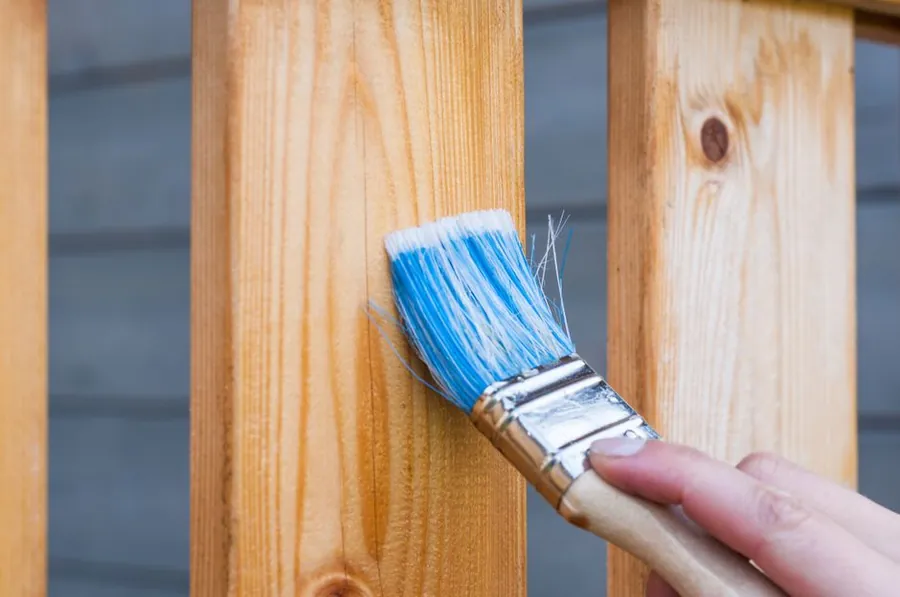
Modern microporous paint gives the most protection and the best UV resistance, and on a south-west facing Torbay gate you should plan on a proper recoat every three to four years, with five or more on something tucked into a side lane. It fails at edges and joints first, and once water is behind the film it stays there, so the repaint is preceded by a proper sand and a look at the joints rather than a quick going-over.
Translucent stain shows the grain, wears rather than peels, and needs doing more often - two to three years on exposure, a little longer under a porch roof. Oil is the lowest-commitment finish to apply and the highest-commitment to keep up, because a seafront gate in oil wants doing annually and will look tired long before twelve months are out. Whichever you choose, the maintenance that counts is the small stuff: touching in a chipped edge the week it happens, and keeping an eye on end grain at the bottom of stiles. The same principle runs through our guide to looking after timber joinery in a Torbay home, and it applies twice as hard outside.
Exposed Streets And Sheltered Ones Are Not The Same Job
Torbay is unusually varied over short distances. A gate on the seaward side of a Babbacombe or Livermead street is in a different climate to one two hundred metres inland behind a wall, and we quote them differently.
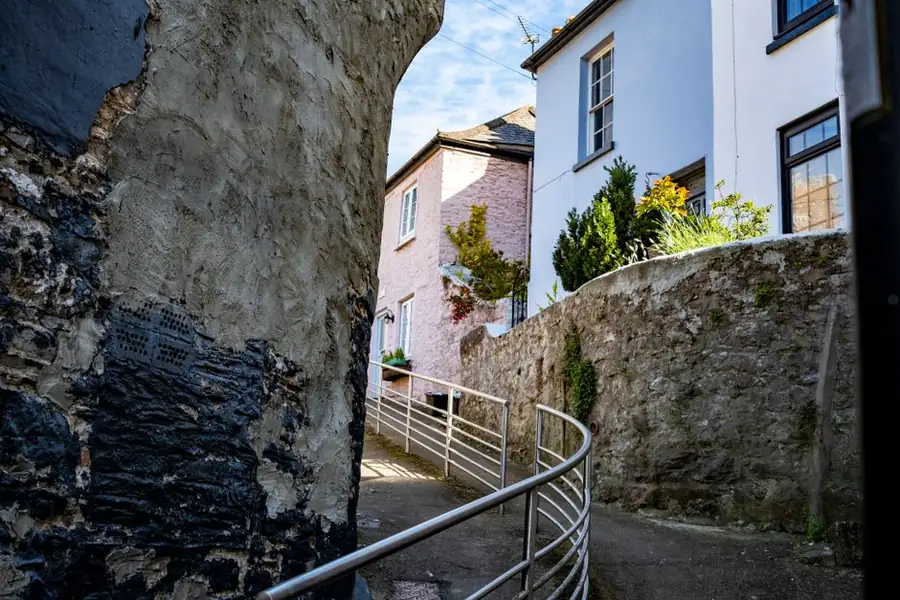
On genuinely exposed frontages - anything with a clear line to the water and the prevailing south-westerlies - we push towards Accoya or iroko, A4 stainless throughout, paint rather than oil, and a gate designed with gaps between boards rather than a solid panel, because a solid gate in that position is a sail and it will pull its own hinges out. Porches and canopies on those streets earn their keep twice over, since they shelter the front door joinery behind them.
On the sheltered streets of the Warberries, Chelston or the valley lanes behind the harbour, good oak with hot-dip galvanised hardware is perfectly sensible and the recoating intervals stretch out. Just check the paperwork before you start. Height limits apply to boundary gates and fences, and the Planning Portal’s guidance on fences, gates and garden walls sets out the one-metre limit next to a road used by vehicles and two metres elsewhere. Torquay also has sixteen of Torbay’s twenty-four conservation areas inside it, and boundary treatments on a street frontage in one of those are worth raising with Torbay Council’s planning and building control team before the old gate comes off its hinges.
What Outdoor Joinery Costs Around Torbay
Prices below are for the joinery made, finished and hung, and they assume the opening is roughly square and the posts are sound. Everything shifts if we are rebuilding a rotten post or working off a wall that has moved.
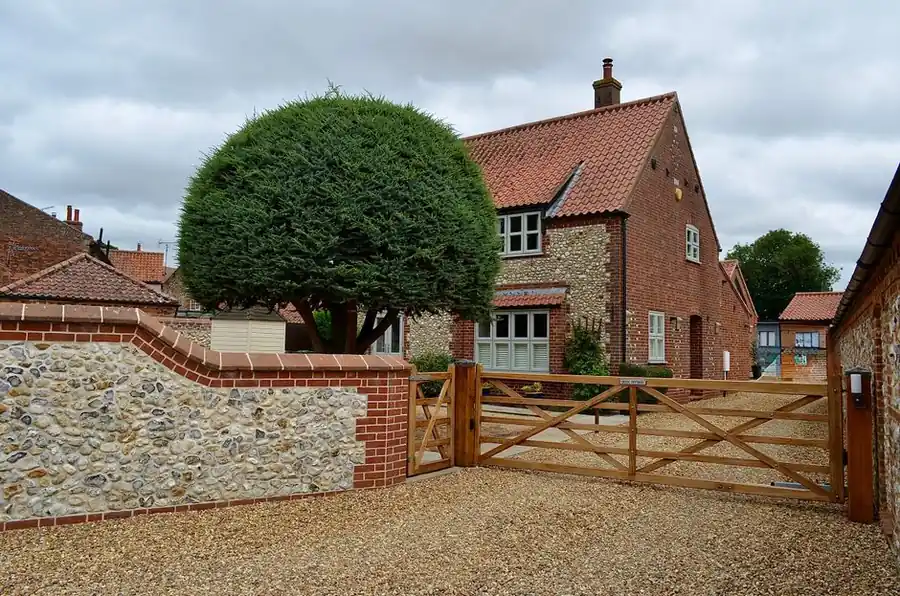
A made-to-measure side gate in treated softwood, painted, with decent galvanised hardware, is usually somewhere between £450 and £800. The same gate in oak or Accoya with A4 stainless ironmongery is more like £900 to £1,700, and most of the gap is material and finishing time rather than labour. A pair of driveway gates is the big jump - anything from £2,000 for a simple softwood pair up to £5,000 and beyond for a wide hardwood set, and that is before you think about automation, which is an electrician’s job and priced separately.
Porches and canopies vary too much to give a single figure. A simple bracketed canopy over a front door, made and fitted, tends to start around £900. A framed porch with posts, a proper roof structure and matching detailing to a Victorian villa runs into several thousand and is usually drawn up first. External door frames, thresholds and linings sit at the smaller end, generally £300 to £700 depending on section and species.
Spend the money on the fixings and the finish before you spend it on the species. A treated softwood gate with marine stainless hardware, sealed end grain and a maintained paint film will outlast an oak gate hung on plated hinges, and it will cost you less to get there.
Talk to us about a gate, porch or external door in Torquay and we will come and look at the opening before quoting anything.