
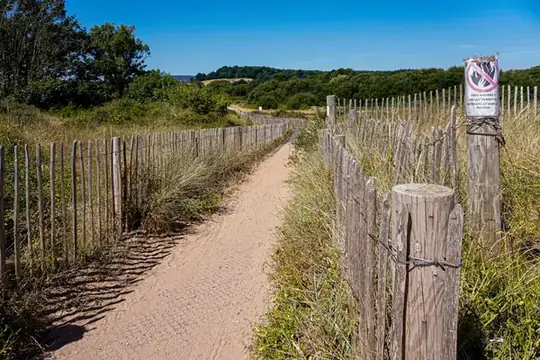
Dawlish Warren National Nature Reserve
Dawlish Warren is a sand spit across the mouth of the Exe, where brent geese, godwits and avocets roost at high tide in autumn and winter.
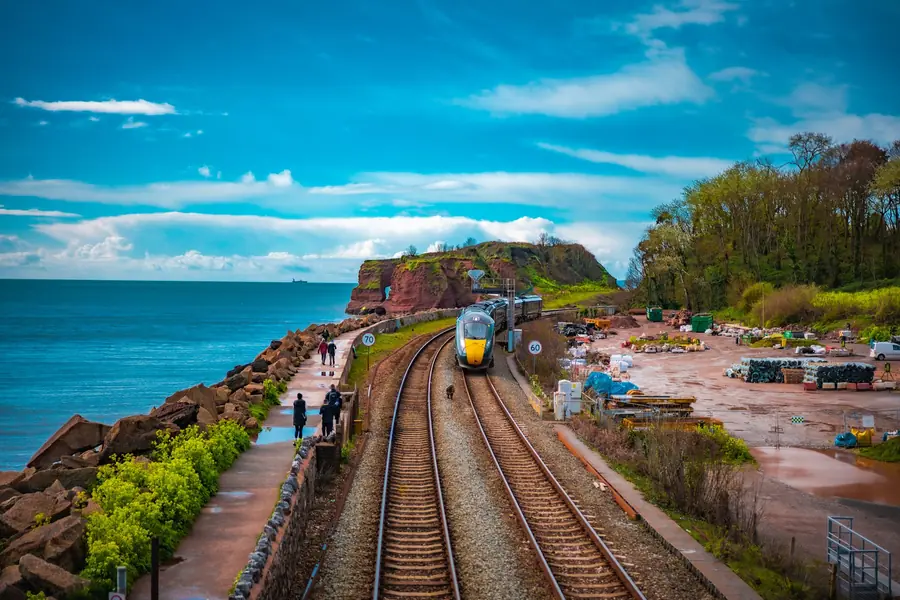
Learn more about Dawlish Warren National Nature Reserve on Google MapsDawlish became a resort almost overnight. Around 1807 John Edye Manning straightened Dawlish Water and made the Lawn out of the marsh beside it, the Strand went up along one side, and Brunswick Place was largely finished by about 1830. Then, in 1846, Brunel's railway arrived along the sea wall, and it has run past the front of the town ever since. Houses near it get salt spray, wind off the sea and the passing trains, and old sashes in tired boxes rattle with all three. We make and repair timber sashes and front doors for Dawlish's Regency and Victorian houses, with draught seals and glazing that quieten them, inside the conservation area Teignbridge District Council designated in 1997.
Tell us roughly what you have in mind and we will arrange a time to come and measure. A photo of the space on your phone is usually enough to start with.
The Joiner Behind It
Dawlish became a resort fast, and the houses round the Lawn, the Strand and Brunswick Place kept their Regency and Victorian sashes. The railway alongside adds noise to think about too.
Luke has done joinery since he was young, and it's the family trade. Getting a period sash to look right and work quietly is learned at the bench, not in a classroom. He and the team make each one in Barton.
Dawlish
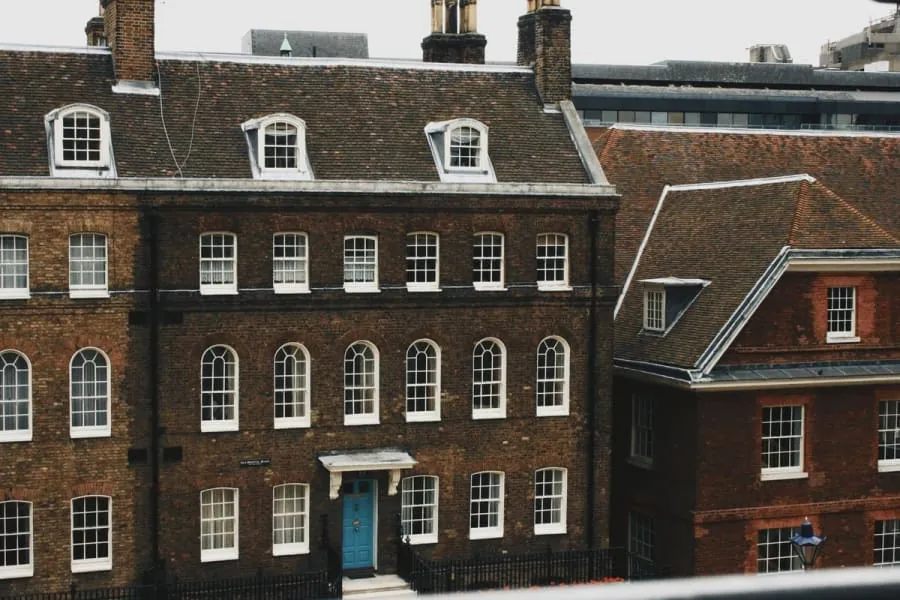
The Regency houses around the Lawn and Brunswick Place were built for visitors who came for the sea bathing, and their windows were made to show off the view and the light. Where those sashes survive, they are often worth repairing. Later in the century villas climbed the slopes along Barton Road, East Cliff Road and Oak Park Road, with larger windows of their own. All of that sits in or near the conservation area, which covers the Lawn, the Strand, Brunswick Place and much of the old town.
Most of the new housing on the north-east side, at Secmaton and Shutterton, comes with modern windows already fitted, so our window work in Dawlish is mostly in the older town. Bedrooms in those new homes often need storage, though, and our page on fitted wardrobes in Dawlish covers both old and new houses.
The Case For It
New beads, parting strips and brush seals stop a sash shaking every time a train or a gust goes by.
Slim double-glazed units, or secondary glazing inside, cut the noise from the sea wall line without changing the outside.
Glazing bars and horns taken from the original sashes around the Lawn and Brunswick Place.
Accoya, sealed joints and stainless or bronze fittings for houses facing the sea.
Panelled doors and fanlights made to the proportions of the Regency and Victorian houses.
Drawings for Teignbridge where the house is listed or the work needs planning permission.
Before You Choose
Ask whether the noise and draughts can be fixed without replacing the window. In many Dawlish sashes, worn beads and loose sashes cause the rattle, and a careful overhaul with seals does more than new glass alone.
If you want double glazing, ask how the maker will keep the glazing bars slim. In the conservation area, thick bars and stuck-on strips are exactly what the council does not want to see.
For a house facing the sea, ask what timber and ironmongery the maker proposes. Spray from the bay reaches a long way inland on a windy day, and standard fittings soon streak rust down fresh paint.
Compared
Owners near the sea wall railway usually want quieter, warmer windows. These are the routes we compare.
| Overhaul with seals | Secondary glazing | New sash, slim double units | Replacement uPVC | |
|---|---|---|---|---|
| Noise reduction | Noticeable | Greatest | Good | Good |
| Draught reduction | Good | Very good | Very good | Very good |
| Outside appearance | Unchanged | Unchanged | Matched to original | Changed |
| Conservation area outlook | Welcomed | Usually fine | Case by case | Poor |
| Original kept | Yes | Yes | Frame often kept | No |
| Relative cost | Lowest | Low to middle | Upper | Middle |
Our Process
Our seven steps for Dawlish windows and doors, from a first look to a check after the winter.
We look at each sash, check for rot and note which windows rattle when a train passes.
Glazing bars, horns and mouldings are recorded and drawn at full size.
We confirm whether the house is listed or affected by the conservation area and prepare drawings if needed.
Each window is priced for overhaul, secondary glazing or replacement so you can compare.
New sashes and doors are made from conditioned timber at Barton, with seals fitted in the beads.
Every face primed and painted before delivery.
Sashes are rehung and balanced the same day. We come back after a winter on the coast to check the seals.
Reassurance
Budget
£1,400 – £9,000
per opening, made and fitted
Overhauling and sealing a sash costs a fraction of a new one. Secondary glazing sits low in our per-opening range, and new accoya sashes with slim double units sit near the top. A panelled front door with fanlight falls in the middle. Timber and glazing options are on our windows and doors page.
Guide range only, VAT included. Your figure comes from the measured visit and the drawing you sign off.
What moves the priceHouses on Barton Road, East Cliff Road and Oak Park Road often have tall upper windows on sloping plots, which need towers or scaffold.
Accoya and stainless fittings for windows facing the sea wall add to the cost and to the life of the window.
Consent drawings and exact copies for listed houses around the Lawn add design time.
Questions
Feedback
Rated 5 out of 5
“Our bedroom is in one of the old Warberries villas and the back wall bows by about an inch and a half across four metres. Two national firms measured it, quoted, then went quiet. These came, measured, and said it needed scribing rather than filling. The wardrobes go right into the corner and there is no gap anywhere. My husband keeps running his hand down the join.”
Rated 5 out of 5
“We run a bar on the harbourside and needed the counter and back fittings replaced without losing a summer weekend. They built the lot off site, came in on a Sunday night and had us trading by Tuesday lunchtime. Knowing the whole thing was made before they ever shut our doors is what sold it.”
Rated 5 out of 5
“Sash windows on the front elevation, and we are in a conservation area so it had to be timber and it had to match. They took a profile off the original, made new boxes in accoya, and the planning side went through without a query. From the pavement you genuinely cannot tell which is which.”
Rated 5 out of 5
“Two alcoves either side of the chimney, and they turned out to be 40mm different in width, which explains why the flat-pack ones we tried first never sat right. Made as a pair but to two different sets of measurements. Small thing, but it is the difference between looking fitted and looking bought.”
Rated 5 out of 5
“We let our place out over the season so everything gets hammered. I asked them to over-specify the drawer runners and they did, and told me exactly which ones so I can order spares. Three summers in, nothing has sagged. The last kitchen we had did not last two.”
Local
Dawlish has a beach, a nature reserve and a town museum within easy reach. Three to visit:
Dawlish Warren is a sand spit across the mouth of the Exe, where brent geese, godwits and avocets roost at high tide in autumn and winter.
Learn more about Dawlish Warren National Nature Reserve on Google Maps
The Brook runs down the Lawn over small weirs, and the black swans that arrived in 1906 still nest beside it.
Learn more about The Lawn And Dawlish Water on Google Maps
Knowle House on Barton Terrace dates from 1805 and has housed Dawlish Museum since 1969. It opens seasonally.
Learn more about Dawlish Museum on Google MapsCoverage
Dawlish is the furthest up the coast we usually go. Here are all the areas we cover.
Send us a photo of the windows and tell us which ones rattle. We will survey them and price an overhaul, secondary glazing or replacement.