
How Long Does Bespoke Joinery Take? A Torquay Workshop Timeline
Bespoke Joinery Torquay
The second question people ask, straight after price, is when they can have it. The honest answer has two halves that get muddled together: how long you wait for a workshop slot, and how long the work itself takes once it starts. Across the commissions leaving our Torquay bench, most projects run six to fourteen weeks from the measured survey to the fitting day, of which perhaps two weeks are spent on site or less. Kitchens sit at the long end, one-off furniture at the short end. This is what happens in those weeks, stage by stage, and where the time genuinely goes.
Two Clocks, And Only One Of Them Is Yours
Every quoted lead time is a queue plus a build. The queue is how much work is already booked in; the build is the hours your commission actually needs. A firm with a light diary can start you next week and a firm with a full one cannot. Neither fact tells you much about how good they are. If anything, the busier workshop is the better sign.
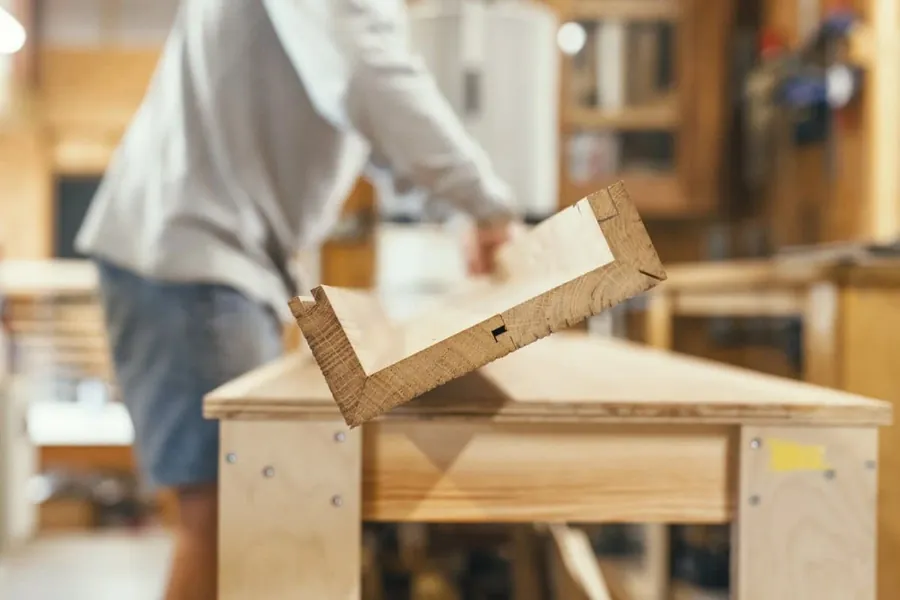
What you can compare is how a firm describes the two. As a rough guide from our own diary, fitted wardrobes run six to nine weeks from survey to fitting, a one-off piece of furniture six to twelve, and a full kitchen ten to fourteen - and every one of those moves depending on what the timber and the finish demand. Ask for the split. A joiner who can tell you “three weeks before we start you, then five weeks of making” has thought about your job. One number with no breakdown behind it is a hope.
The Survey Is Not A Formality
An hour or two in your house, early on, saves days later. We are measuring, but we are also looking at things that decide the programme: how far out of plumb the walls are, whether the floor slopes, what the route into the room will take at its narrowest point, where the stopcock and consumer unit are, and whether anything is likely to be hiding behind the plaster.

In Torquay’s older housing that last one earns its keep. Victorian villas around Wellswood and the Warberries have been altered repeatedly over 140 years, and finding a bricked-up opening or a redundant flue on fitting day is what turns a tidy programme into a delayed one. Where the work touches structure or a staircase, the local authority may need to be involved, and the government’s guidance on building regulations approval is the starting point for whether that applies to you. Building control lead times are outside anyone’s control, which is a reason to find out early rather than late.
Drawings, Samples, And The Day The Clock Really Starts
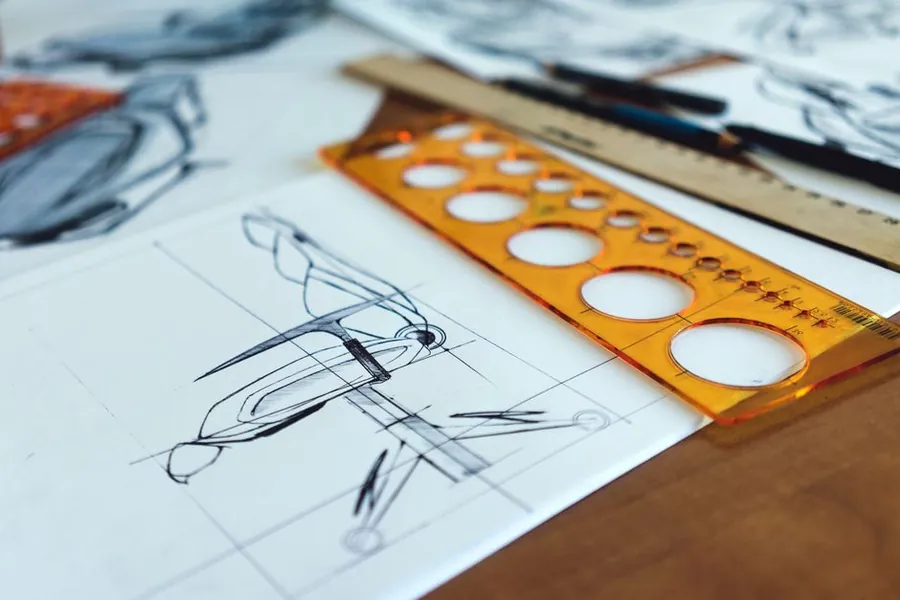
Nothing is cut until you have seen a scale drawing and agreed it. Elevations, real dimensions, the interior layout, the finish, the handles. This stage takes a week or two of back and forth and it is the cheapest part of the whole project to change your mind in - moving a drawer bank on paper costs nothing at all.
It matters for another reason. Once approved drawings turn into machined components, your commission stops being cancellable in the way a shop-bought item would be: regulation 28 of the Consumer Contracts Regulations 2013 excludes goods made to a customer’s specification from the standard cancellation right. That is not a trap, it is the nature of one-off work, but it is worth knowing which conversation is the last easy one. Take the samples home and look at them in the actual room at the actual time of day before you say yes.
Timber Needs Time Before It Needs A Machine
Boards do not go straight from the rack to the saw. Timber arrives at a moisture content set by wherever it has been stored, and it has to come into balance with the conditions it will live in before anything is cut to a final size. Skip that and you get doors that fit beautifully in the workshop and bind in the house six weeks later.
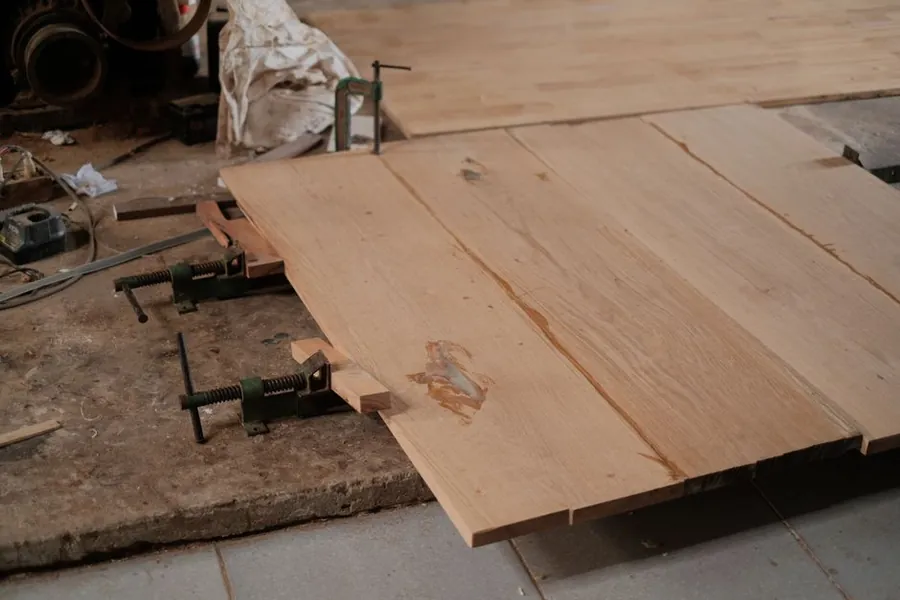
In practice this is one to two weeks of the programme doing apparently nothing, and more if a species has come in wetter than expected. Coastal Devon makes it less optional than it would be elsewhere: a workshop in a humid part of the country has to condition stock towards where the finished piece is going, not towards the shop floor. The British Woodworking Federation publishes standards work on this if you want the technical background. For a customer, the practical point is simply that a lead time with no conditioning built into it belongs to someone cutting corners.
The Bench Weeks
This is the part people picture, and it is roughly half the programme. Components are machined, joints cut, carcasses assembled and squared, doors made and hung dry, drawers fitted individually. On a kitchen it runs three to six weeks; on a single piece of furniture, one to three.
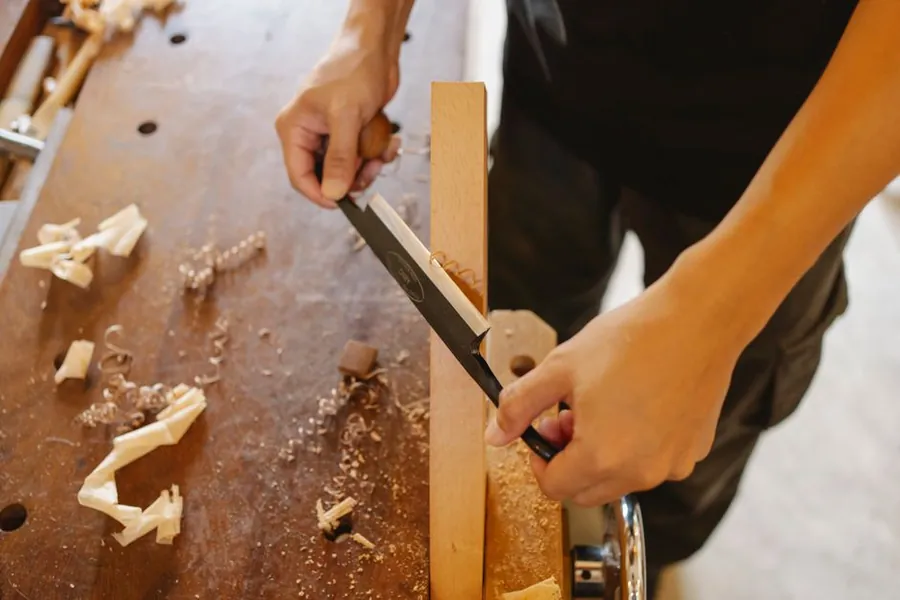
Two things extend it more than any other. Drawers, because each one is a small box that has to be made and fitted on its own, and anything angled - a raked door under a Torquay roof slope, a curved handrail, a bay that returns at two different angles. If you want to know why one quote is longer as well as dearer than another, this is usually where the difference lives. It is the same effect that drives the price differences we set out in what a bespoke kitchen costs in Torquay.
Finishing Cannot Be Hurried
The stage that surprises everybody. Sanding through the grits, then coats with drying time between each, then curing. Hardwax oil wants a day between coats and is reasonably forgiving. Sprayed lacquer builds faster but needs a clean, warm, dust-free space. Paint is slowest: primer, filler, sanding, two or three top coats, and a full cure that continues for days after the surface feels hard.
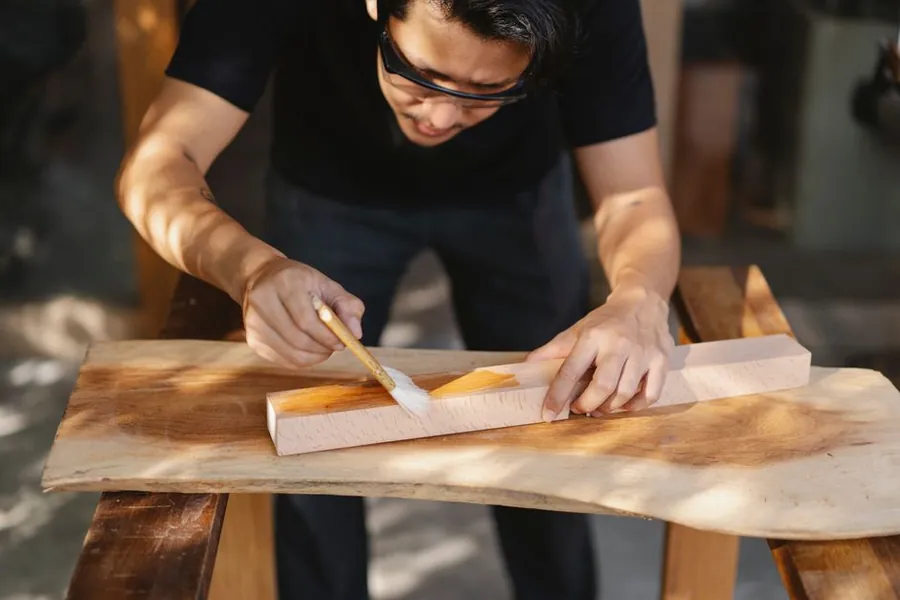
Budget one to two weeks for finishing on a painted kitchen, and expect cold, damp weather to stretch it. Every finish has a temperature and humidity window, and forcing a coat on outside that window produces a surface that stays soft and marks under a mug within a month. When a joiner tells you the finish added a week, that week is buying you the next fifteen years.
Fitting Week Is Shorter Than You Think
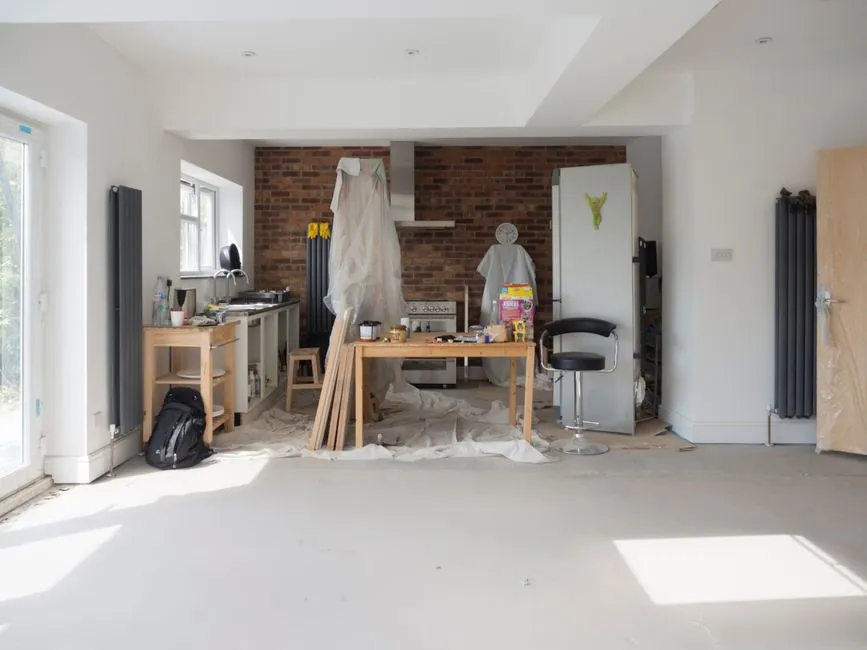
Because the work is made off site, the disruptive part is short. A wardrobe is one to three days. A staircase is two to five days, plus a return for the balustrade. A kitchen is one to three weeks including the other trades, with a pause in the middle if a stone worktop is being templated after the cabinets go in.
Then there is the visit nobody puts in the diary and everybody needs. Timber moves as it settles into a heated house, so doors and drawers are worth adjusting a few weeks after handover. We build that call back into the programme rather than treating it as a complaint, and if a firm has no snagging visit in its process, ask what happens when a door drops in November.
When To Book, In A Torbay Year
Demand here is seasonal in a way that a workshop inland would not recognise. Holiday lets and guest houses want work done between October and March, so autumn fills up early with changeover-driven jobs. Anyone hoping for a kitchen finished before Christmas needs to be approving drawings in September, not ringing round in November.

Late winter is the quiet stretch and the best value for a domestic customer with no fixed deadline, with one caveat: a January fitting in an unheated room is the worst possible moment to install anything painted, so we will sometimes hold a piece back a fortnight rather than fit it into a cold house. Spring and early summer suit the bigger structural jobs, when opening a house up for a week is less miserable for everyone in it.
If you have a date you are working towards - a let ready for Easter, a bedroom finished before a baby arrives - say so at the first conversation. Get a free quote and we will tell you honestly whether it can be done.