
How Much Do Fitted Wardrobes Cost In Torquay?
Bespoke Joinery Torquay
Somewhere between £400 and £12,000. That is the honest answer, and it is useless to you until you know which end of the range your bedroom sits at and why. The spread is not a trick of averaging. Four genuinely different products all get called fitted wardrobes, and they get screwed to very different walls. A flat run of melamine in a square new build room at The Willows is one job. A painted wall of cabinetry scribed around the cornice of a Victorian bedroom above Meadfoot is another trade entirely.
This guide sets out what people around Torquay actually pay, which decisions carry most of the money, and what the town’s own housing does to a quote. By the end you should be able to look at your bedroom and place it in the range yourself, before anyone has been out to measure.
What Fitted Wardrobes In Torquay Really Cost
Four products share one name, so here they are pulled apart. Flat-pack wardrobes from the big retailers run £400 to £2,000, and you or your fitter assemble boxes made to standard sizes. Modular systems - the semi-fitted ranges where a supplier trims standard carcasses into your space - sit around £900 to £3,000. The national sliding-door brands typically land between £2,000 and £7,000 depending on doors and length. Joinery-made wardrobes, built for your room in a workshop and installed as finished cabinetry, run from about £2,500 for a compact painted run to £12,000 and beyond for a full wall in a premium finish.

Those bands are the ones we publish on our fitted wardrobes page, and they hold for most quotes you will gather locally. The interesting question is never the band. It is why two joinery quotes for the same bedroom can be £3,000 apart, and the rest of this post is really an answer to that.
One warning before the detail: a low quote that has not accounted for your actual walls is not a saving. It is a deferred argument. Torquay bedrooms punish assumptions, for reasons that get their own sections below.
Three Decisions Carry Most Of The Money
Strip any wardrobe quote down and three choices are doing most of the work. The first is sheer size - how many metres of wall, and whether the cabinets run to the ceiling. Full height always costs more than leaving a dust shelf of dead air above, and is nearly always worth it, because the top boxes are where the suitcases and the winter duvet go.
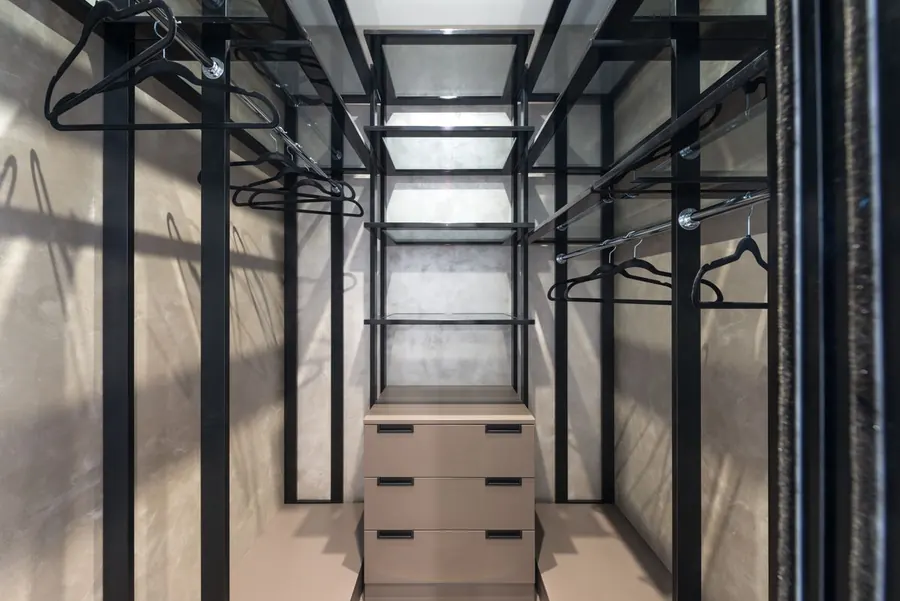
The second is the fronts. Doors are most of what you see, so they carry a disproportionate share of the budget: a plain hinged door in a foil finish, a shaker door hand-painted on site and a sprayed door with routed detail can differ in price by a factor of three across a full wall.
The third is what goes on behind them. A hanging rail and one shelf is the cheap interior. Banks of drawers, pull-down rails, shoe pull-outs and lighting are where a mid-range quote quietly becomes a large one. None of it is padding - drawers are the most labour-intensive thing in the piece - but it is the part of the specification where you have real room to trim without the wardrobe looking any different from the bed.
Victorian Bedrooms Around Wellswood And Chelston
A great deal of Torquay’s housing went up in the second half of the nineteenth century, and its bedrooms have a shape every local fitter knows: high ceilings, a chimney breast interrupting one wall, deep skirting, often a cornice, and not one true right angle in the room. Measured properly, walls in these houses can be out of plumb by a couple of centimetres over their height. The house is not falling down. It has spent a century settling onto Torquay’s slopes and it is finished moving.
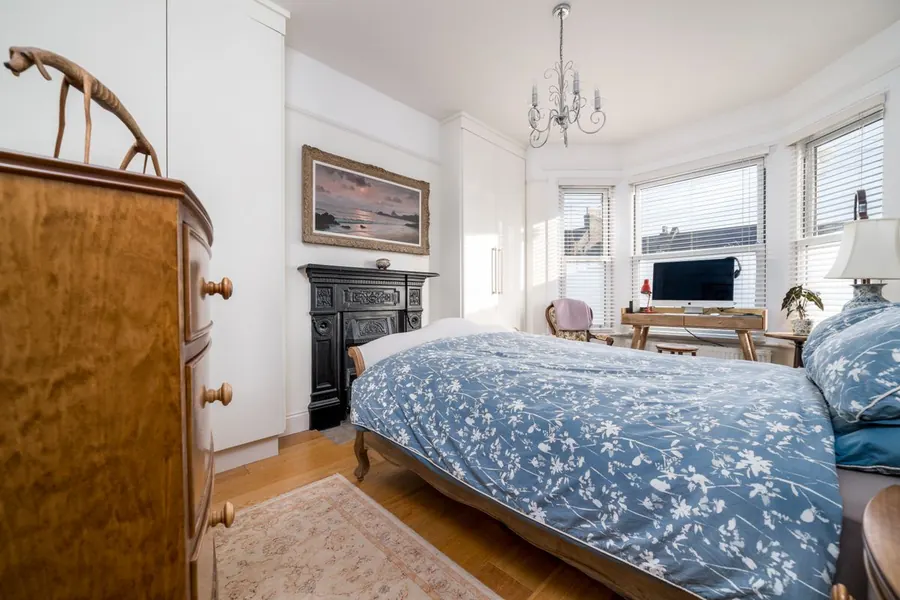
For a wardrobe this means scribing: cutting each panel to follow the actual line of the wall, floor and ceiling rather than a theoretical straight one. It is slow, skilled work, and it is the main reason a made-to-measure piece in a period bedroom in Wellswood or Chelston costs more per metre than the same volume of storage in a new build at Shiphay. It is also the reason the finished piece looks inevitable, as though the house was built around it - a standard carcass pushed into the same space advertises every gap with a strip of filler.
Budget accordingly. In a Victorian bedroom the realistic entry point for proper fitted joinery is nearer £3,500 than £2,500, and a full alcove-to-alcove scheme with a painted finish commonly lands between £5,000 and £8,000.
Sloping Ceilings And Rooms In The Roof
The other Torquay speciality is the room with no full-height walls. The town is built over a run of steep hills, so lofts got converted early and often, and plenty of houses step down their plots with bedrooms tucked partly into the roof. An under-eaves space is close to worthless with freestanding furniture - a bought wardrobe simply cannot stand there - which is exactly why fitted work earns its keep in these rooms.
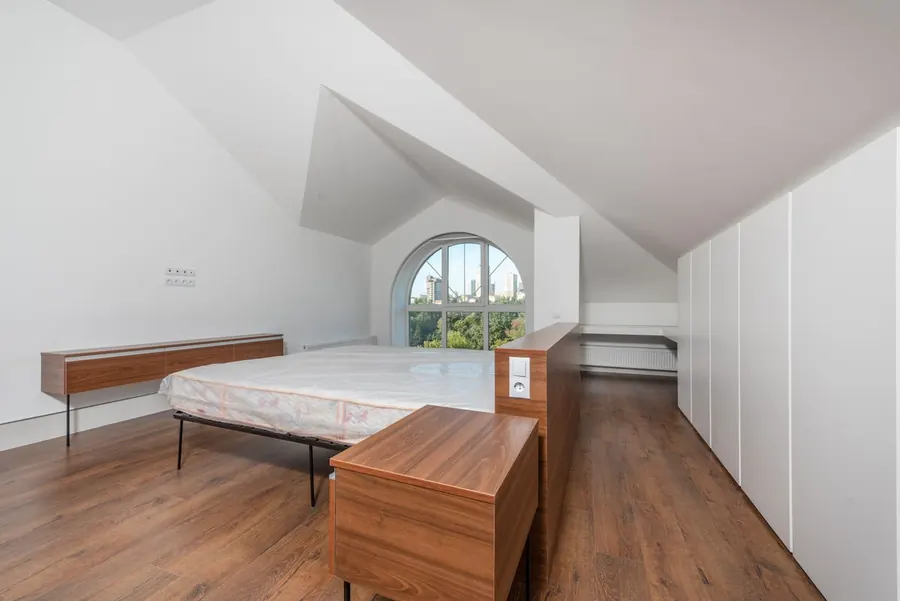
Angled work carries a premium, and the premium has a plain cause. Every raked door and cabinet side is a one-off: the pitch of your roof is not a catalogue dimension, so nothing can be batch-cut. Hinging a triangular door so it opens without fouling the slope takes proper thought at the drawing stage. As a rough rule, storage built into a slope costs perhaps a fifth to a third more than the same frontage against a flat wall - against which you should weigh the fact that it is turning floor area you could not otherwise use into the most useful storage in the house.
The Outside Wall Question
Here is the one nobody asks until after the wardrobe is in. A large share of Torquay’s older housing has solid walls with no cavity, and a wardrobe stuffed full of clothes against a cold external wall traps a pocket of still air that the room’s heating never reaches. In a mild, damp climate like this one, that is an invitation to condensation and, eventually, to mould on the back panels.
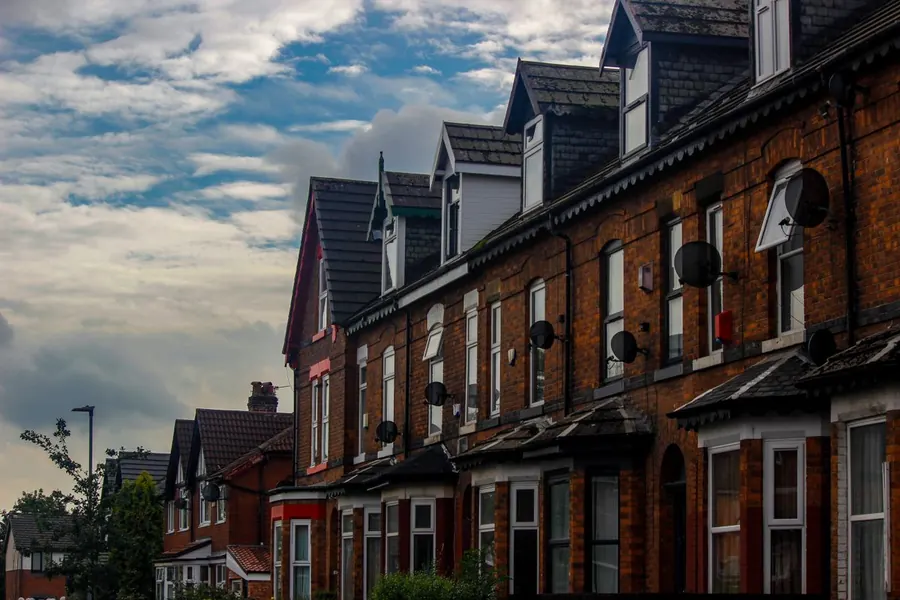
The fix is designed in, not bolted on: a ventilation gap behind the carcass so air can move, moisture-resistant board for the backs, and sometimes vents through the plinth or top boxes to let the cavity breathe. It adds a modest amount to the price, usually tens of pounds of material and a little labour rather than hundreds. It is also one of the sharpest questions you can ask anyone quoting for your job. A fitter who plans to screw a solid back hard against the outside wall of an 1890s terrace has not thought about where the moisture goes. On an internal wall, none of this applies and you should not be charged as though it does.
What The Finish Adds
Finish is the most visible cost lever, so it deserves plain numbers rather than adjectives. A melamine or foil-wrapped door is the budget option and can look perfectly crisp in a modern room. A hand-painted finish, brushed on site over a primed timber door, adds character and can be retouched for as long as you own the house. A sprayed finish, applied in the workshop before installation, gives the flattest, most furniture-like surface and adds several hundred pounds across a typical scheme. Natural timber and veneer sit at the top, priced by species.

Our own leaning, for what it is worth: in a period bedroom, paint. It suits the buildings, it hides the joins that scribed work necessarily has, and the colour is yours rather than a laminate supplier’s. Save the exposed oak for rooms that can show it off.
Where A Joiner Beats The Brands, And Where They Do Not
An honest local firm should be able to tell you when not to hire them, so: if your bedroom is square, modern and plasterboard-flat, and you want sliding mirrored doors wall to wall, the national brands do that efficiently and a joiner will struggle to beat their price for it. Equally, for a rental you plan to sell in three years, flat-pack is a rational choice.
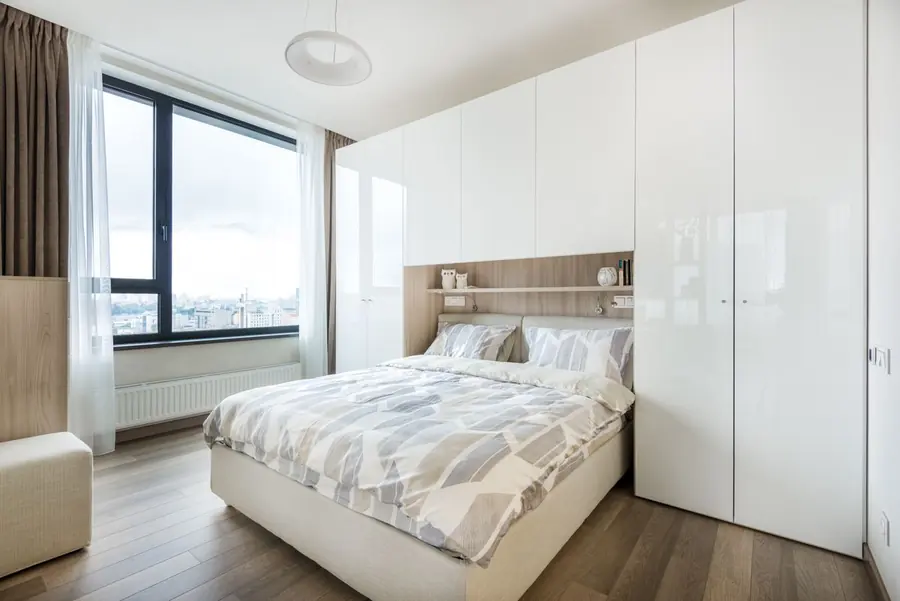
The case for a workshop flips the moment the room stops being standard - which, in this town, is most of the time. Chimney breasts, bays, slopes, solid walls, cornices you want kept: this is precisely what made-to-order joinery exists for, and it is where the brands’ surveyors start talking about boxing things in. Check any firm you shortlist against the government-endorsed TrustMark register, and asking to see photographs of finished work in rooms shaped like yours rather than a showroom.
Getting A Quote You Can Actually Compare
Two numbers can only be compared when they describe the same wardrobe, so make every quote commit itself in writing: the material of the carcass and the doors, the finish and who applies it, the interior layout drawn out, whether removal of old furniture and making good the walls are included, and the lead time. A single figure on one line of an email commits to none of that.

On payment: staged is normal, everything-up-front is not, and Citizens Advice explains how paying by card protects you if a firm folds mid-job. We went through the same exercise for stairs in our guide to what a bespoke staircase costs in Torquay, and the conclusion transfers: the cheapest quote is frequently the one that has measured least.
If you would like a figure for your own bedroom - alcoves, slopes, leaning walls and all - get a free quote and we will come and look properly.